Businesses increasingly rely on ERP (Enterprise Resource Planning) systems to unify finance, HR, supply chain, sales, and more into one platform. But what is ERP development, and why is it so important? In short, an ERP system is like a company’s central nervous system. It provides a single source of truth by integrating key workflows…

Enterprise Resource Planning (ERP) systems unify all your company’s data and workflows into one platform. The core ERP modules, such as Finance, Human Resources (HR), Inventory/Warehouse, and Production/Manufacturing, automate key business functions and feed into a shared database. For example, the finance module tracks payables/receivables and ledgers, the inventory module manages stock levels, and the…
Integrating Customer Relationship Management (CRM) and Enterprise Resource Planning (ERP) systems transforms isolated data silos into a single source of truth. This unified approach means sales, finance, inventory, and customer service share information instantly. In fact, experts note that connecting CRM with ERP provides a unified view of key data that boosts efficiency and performance….
Enterprise Resource Planning (ERP) development is the process of designing, building, and implementing a software system that unifies an organization’s core business processes. In the digital age, companies often struggle with fragmented data and manual workflows. ERP development explained means creating a tailored platform that brings together functions like finance, HR, inventory, and sales into…
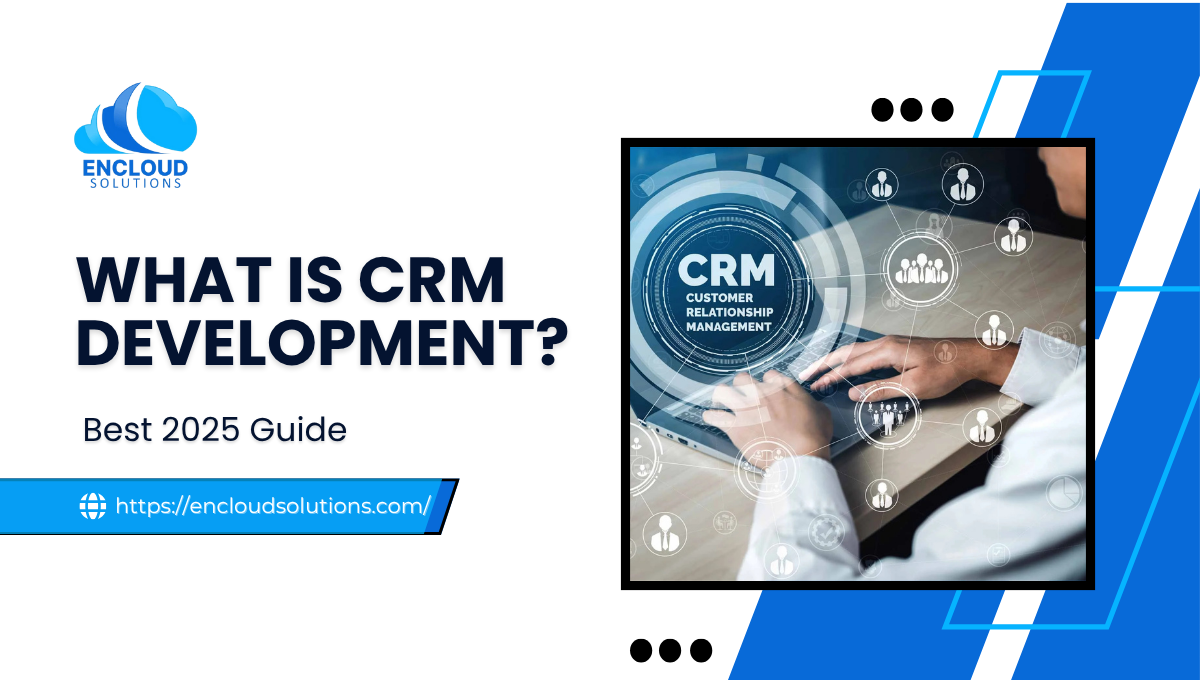
Have you ever wondered how businesses keep track of every customer interaction and turn them into stronger relationships? The answer is CRM development, the process of creating and customizing software to manage customer relationships and data. In simple terms, CRM stands for Customer Relationship Management, and CRM development involves designing, building, and configuring CRM software…